The National Capital Region is located on the traditional territory of the Algonquin Nation. The NCC recognizes the deep connections that the Algonquin Nation has to these lands and the Ottawa River.
The NCC has been working with the Algonquin Nation for several years now in a spirit of friendship, respect and sustainable partnership. We work together to ensure that Algonquin interests and views are reflected in our projects and initiatives.
Projects
Here are some examples of the initiatives under way or recently undertaken in collaboration with the Algonquin Nation. These projects demonstrate the NCC’s commitment to integrating Indigenous perspectives when developing and enhancing the National Capital Region.
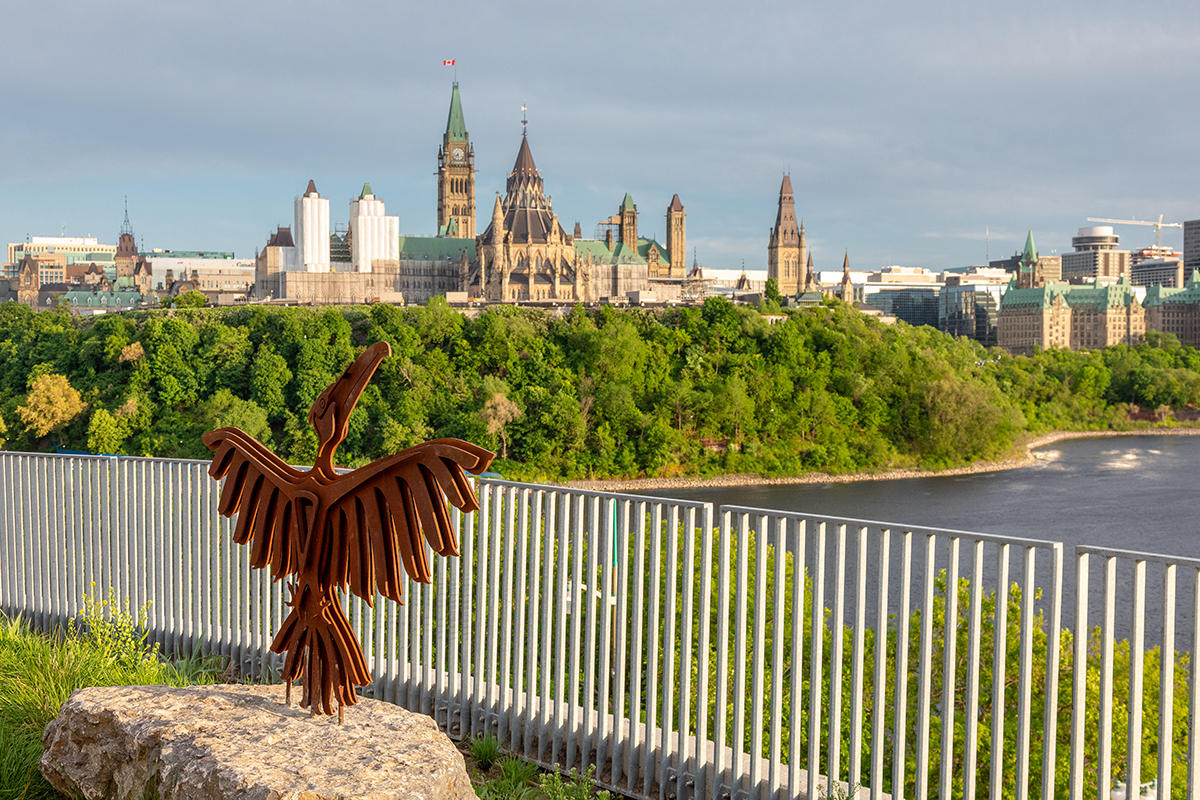
Kìwekì means “returning to one’s homeland.”
Kìwekì Point was redeveloped in partnership with local Algonquin communities. The NCC held visits and a working group to incorporate Algonquin community perspectives into the site’s design and interpretive elements. Today, the site reflects the cultural and spiritual significance of the area to the Algonquin Nation.
The point was renamed through a committee decision. The Algonquin language is featured on the interpretive panels. Indigenous artwork was installed: the park now includes eight animal sculptures by Algonquin artist John Tenasco that illustrate the spiritual connections that Indigenous communities have with the land, the air, water and animals.
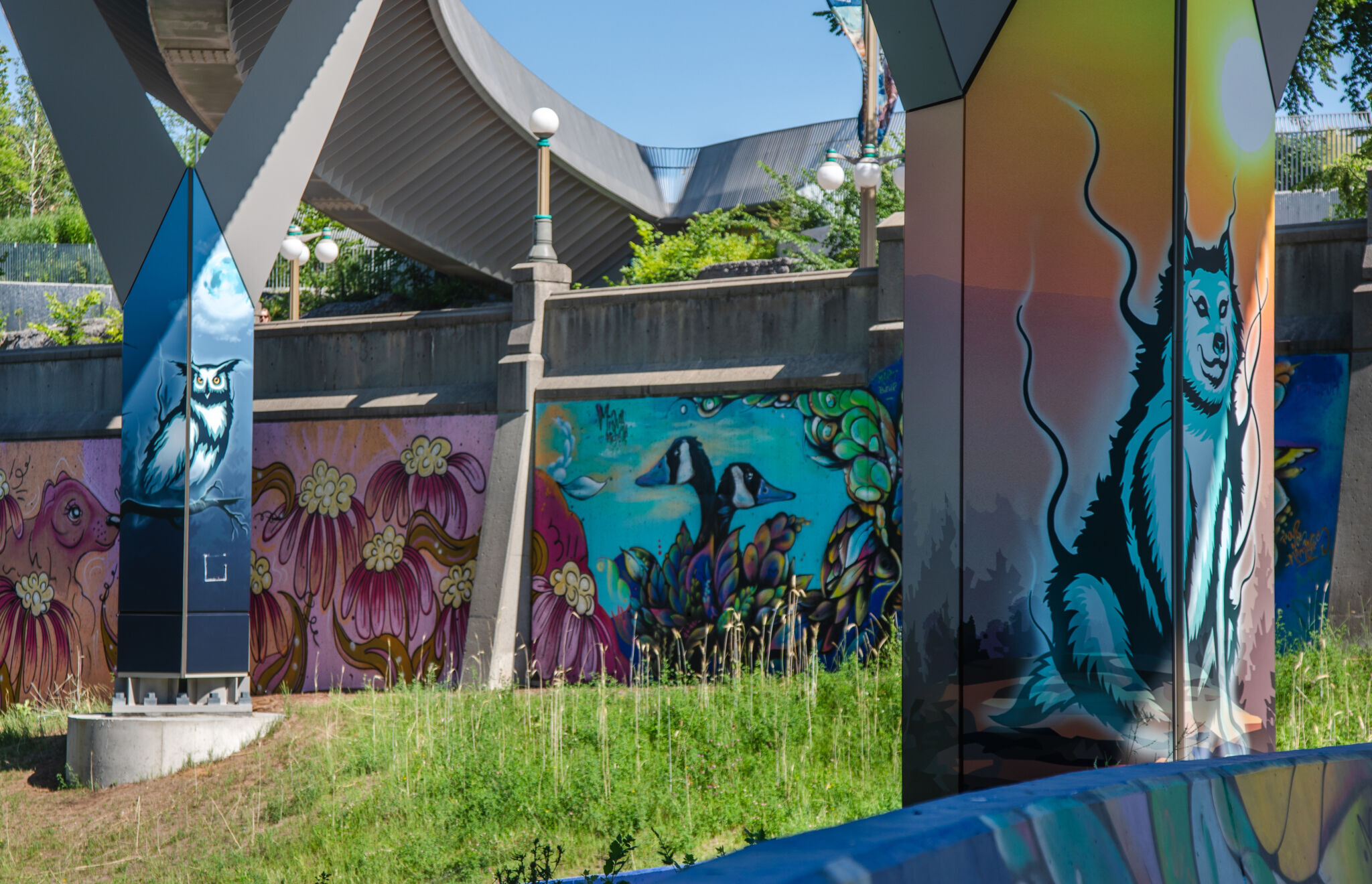
Pìdàban means “dawn.”
The pillars of the footbridge connecting Major’s Hill Park to Kìwekì Point were decorated by Anishinabe artist Jay Odjick. His artwork is inspired by the dawn and by the forest: one pillar is dedicated to the night (the owl), and the other to the day (the wolf).
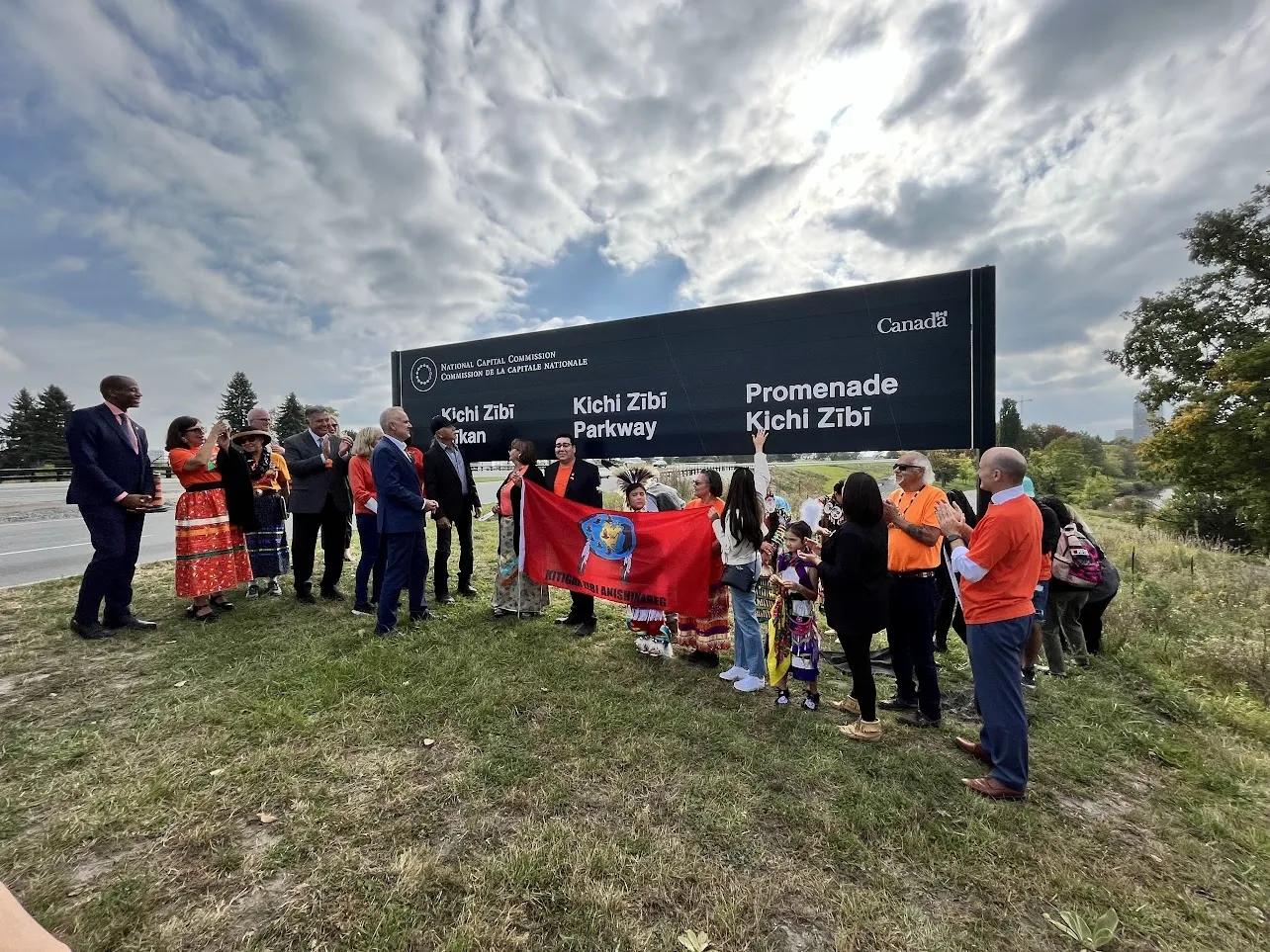
Kichi Zībī Mīkan means “Great River Road.”
This parkway was renamed in a toponymic process, in consultation with local Algonquin communities. Naming the parkway Kichi Zībī Mīkan is a reference to the original name for the Ottawa River.
Reclaiming the original name contributes to reconciliation efforts and promotes Algonquin Nation history, language and culture.
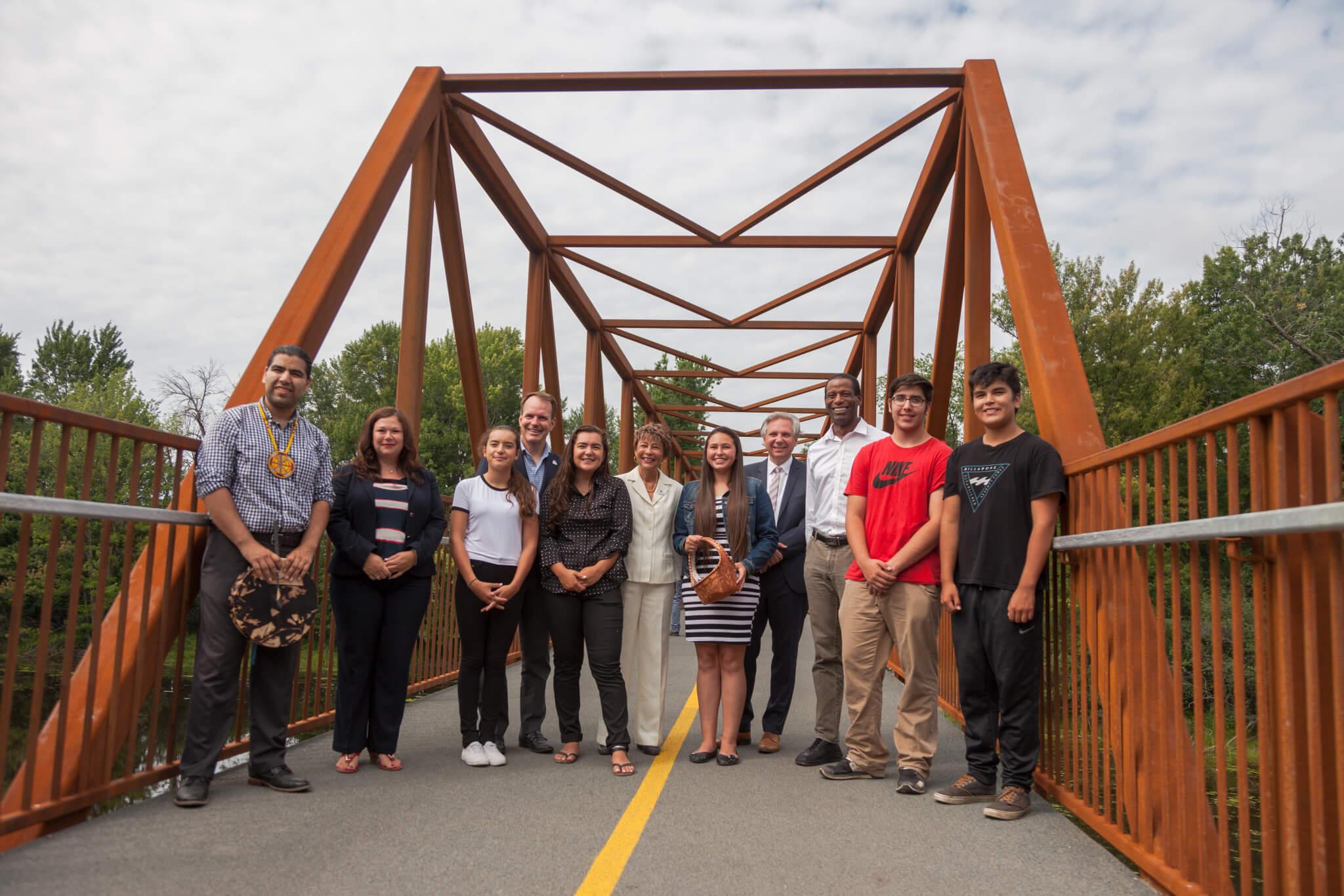
Mâwandòseg means “land where we once gathered for celebration.”
Mâwandòseg Bridge, inaugurated in 2017, allows people to cross Leamy Creek in Leamy Lake Park. It is located at the National Capital Region’s most popular archaeological excavation site.
The name was chosen by youth from Kitigan Zibi Anishinabeg First Nation.
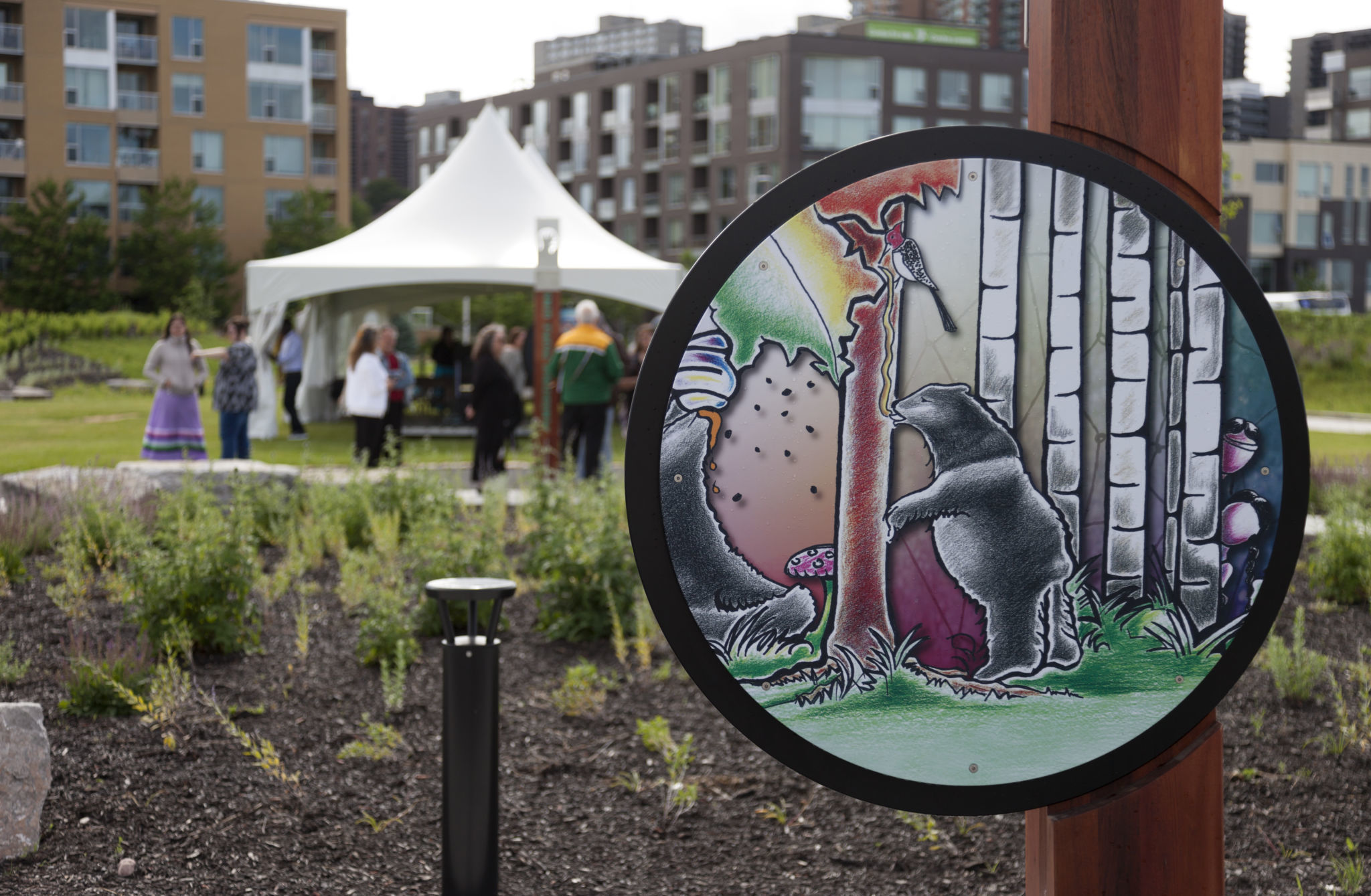
Pīndigen means “Come on in! All are welcome here!”
Pīndigen Park, at the southeast corner of Wellington and Booth streets in LeBreton Flats, is a great example of collaboration. The park’s name evokes the spirit of inclusivity and harmony among people and extends a warm welcome.
The landscaping was done in collaboration with elders from local communities. The NCC facilitated discussions between Canadian Heritage and Algonquin First Nations regarding designs for the project’s interpretive panels, layout and visual elements.
Modernization of the Philippe Lake campground is in full swing. Renovation provides an opportunity to re-interpret campground elements and explore its features and history, an effort involving the elders of Kitigan Zibi Anishinabeg First Nation.
Through this collaboration, new interpretive panels will feature the Algonquin language. This initiative also recognizes the Algonquin Nation’s ancestral territory and knowledge and promotes its cultural and spiritual richness, thus strengthening ties with the community.
Ongoing collaboration
The NCC will continue to engage with Indigenous communities to ensure their voices are heard and reflected in our decisions.
Leamy Lake Park contains the largest pre-contact complex of archaeological sites in the Outaouais region. The artifact collections recovered from these sites provide rich information about past First Nations culture in the National Capital Region.
In 2012, the NCC entered into a partnership with the Algonquins of Pikwàkanagàn and Kitigan Zibi Anishinabeg First Nations for the co-management of archaeological resources. The partnership underlines First Nations’ active and direct role in caring for their ancestral legacy. It is the only agreement of its kind between the federal government and Indigenous communities in Canada.
The NCC is the main federal urban planner in the National Capital Region. The Plan for Canada’s Capital, 2017–2067 is a document that guides the long-term planning of the Capital. All plans developed by the NCC derive from this master plan, which recognizes the importance of the Algonquin Nation in the identity and development of the Capital.
The NCC regularly consults with stakeholders, including Indigenous communities, to incorporate their perspectives into our planning work.
Learn more about engagement activities under way with Indigenous communities by visiting these links: